
Biochar for Southern California Soil: Build Healthier, More Resilient Soil That Lasts

Biochar for Southern California Soil: Build Healthier, More Resilient Soil That Lasts
Biochar, charged biochar and vermicompost blend, and organic soil amendments for farms, nurseries, landscapers, and growers throughout Southern California.
In Southern California, healthy soil has to work harder.
Hot temperatures, low rainfall, sandy or depleted soils, irrigation demands, and years of intensive cultivation can make it difficult to maintain the moisture, organic matter, and biological activity plants need to thrive.
At VermisTerra, we believe the answer isn’t simply to keep adding more fertilizer or compost.
It is to build the soil ecosystem.
We are a family-owned, farmer-first operation in Thermal, Riverside County, California, producing earthworm castings, vermicompost, biochar, charged biochar blends, and other biological soil amendments. We have been working with earthworms, soil, and agriculture for decades, and our approach is simple:
Create a healthier environment for the soil biology, and give plants the conditions they need to grow.
What Is Biochar?
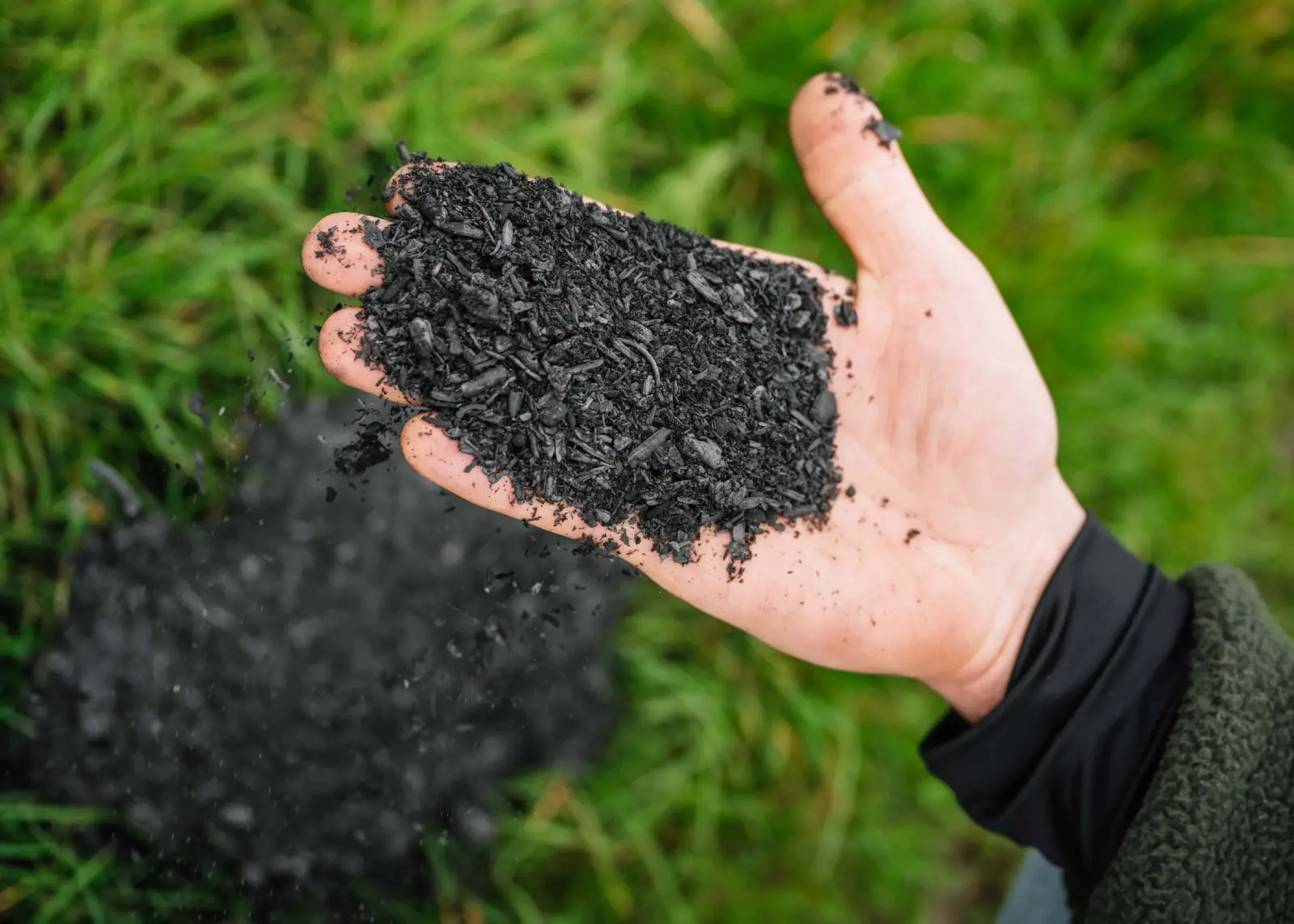
Biochar is a stable, carbon-rich material produced by heating organic biomass under controlled conditions with limited oxygen. It looks like charcoal or ash but has more soil benefits in comparison.
Unlike fresh organic matter that microorganisms can consume and decompose relatively quickly, biochar contains a significant portion of carbon in forms that are much more resistant to decomposition.
That makes biochar particularly interesting for agriculture and soil restoration.
Think of it as creating long-term infrastructure inside the soil- the ancient Indigenous of the Amazon mixed charcoal, broken pottery, animal bones, and organic waste into the natural, nutrient-poor tropical earth. Similarly today, we use biochar and earthworm castings and biological inoculants to enrich soil with life.
Its porous structure can provide habitat for microorganisms, help retain water and nutrients, and contribute to improved soil structure. Think of it like hotels or apartments for microbes. More microbes staying in your soil means healthier soil, more organic matter, fertility, carbon sequestration, and water holding capacity.
For Southern California growers, that long-lasting quality can be especially valuable.
Potential benefits of biochar include:
-
- Improved soil water-holding capacity
-
- Increased nutrient retention
-
- Greater soil porosity and improved physical structure
-
- Habitat for beneficial microorganisms
-
- More efficient use of irrigation and nutrients
-
- Long-term carbon storage in soil
-
- Support for soil biological activity
-
- Reduced dependence on continually replacing organic carbon
Biochar isn’t a conventional fertilizer.
Instead, it can help create a better environment in which soil biology, nutrients, water, and plant roots can interact.
Why Charged Biochar Is Different
Raw biochar has an enormous amount of internal surface area and many pores.
That is part of what makes it useful—but it also means that what you put into those pores matters. If you don’t activate or charge your biochar first, it can actually cause stress and side effects to your grow. You might experience nutrients being pulled from the soil and plant in order to charge up the biochar.
This is where charged or pre-charged biochar comes in.
At VermisTerra, we activate our biochar with earthworm castings and our proprietary fermented organic enzymes with naturally occurring fulvic acids, creating a biological soil amendment designed to bring carbon and biological richness together.
Instead of putting relatively “empty” biochar into the soil and waiting for it to interact with nutrients and microorganisms, pre-charging introduces biological material before the biochar reaches the root zone.
Think of it this way:
Biochar provides the structure.
Earthworm castings provide biological richness.
Together, they create a habitat for a living soil ecosystem.
Our charged biochar is designed to support the relationship between soil, microorganisms, nutrients, water, and plant roots.
This is why we think of it as a pathway toward long-lasting, Terra Preta-inspired soil.
3 Ways Charged Biochar Can Do More Than Compost Alone
Compost is an incredibly useful soil amendment, and we don’t view biochar as a replacement for compost.
In fact, biochar and vermicompost can work extremely well together.
But they perform different functions.
1. Biochar provides long-term carbon infrastructure
Compost is organic matter that microorganisms can consume and transform.
That’s valuable—but much of that carbon continues to cycle through the soil ecosystem.
Biochar, by contrast, contains a more stable form of carbon that can persist in soil for a very long time.
This means you aren’t simply adding food to the soil.
You’re also adding structure that can remain there for thousands of years!
2. Biochar creates microscopic habitat for microorganisms
The pores and surfaces within biochar can provide places for microorganisms to attach and live.
When combined with earthworm castings, the biochar becomes part of a more biologically active soil environment.
Instead of thinking only about adding more microbes, think about providing them with a place to live.
Healthy soil isn’t just about how many organisms are present.
It’s also about creating the conditions that allow a diverse biological community to establish and function.
3. Biochar can help hold water and nutrients in the root zone
Southern California growers know that water is one of the most valuable resources on the farm.
Biochar’s porous structure can increase a soil’s capacity to retain water and nutrients, depending on the type of biochar, application rate, and existing soil conditions.
That can be particularly useful in arid and drought-prone climates such as Southern California.
Rather than allowing water and soluble nutrients to move rapidly through certain soils, biochar can provide additional surfaces and pore space where water and nutrients can be retained.
The goal isn’t simply to add more inputs.
It’s to make the soil better at holding onto the resources you’re already putting into it.
Three Compost “Side Effects” that Vermicompost and Biochar Blend Can Help Address
Again, compost is valuable, and we aren’t suggesting growers stop using it.
But compost has limitations that are important to understand.
1. Compost vs Vermicompost nutrients
Compost and vermicompost is biologically active organic matter, with vermicompost being richer in microbial life thanks to the work of earthworms.
As microorganisms break it down, carbon is released and the volume of the material decreases over time. Rapid break down of carbon can rob plants of nitrogen. Using vermicompost- more stable and pre-digested by worms will reduce if not prevent Nitrogen draft and tip burn.
According to studies at Griffith University of Queensland Australia, Vermicompost retains nutrients for long time and while the conventional compost fails to deliver the required amount of macro and micronutrients including the vital NKP to plants in shorter time, the vermicompost does. In, Argentina, farmers who use vermicompost consider it to be seven (7) times richer than conventional composts in nutrients and growth promoting values
Biochar is considerably more resistant to decomposition, giving you a source of carbon that can remain in the soil much longer.
2. Vermicompost builds fertility, pest resistance and disease resistance
Vermicompost is rich in NKP (nitrogen 2-3%, potassium 1.85-2.25% and phosphorus 1.55-2.25%), micronutrients, beneficial soil microbes and also contain ‘plant growth hormones & enzymes’. It is scientifically proving as ‘miracle growth promoter & also plant protector’ from pests and diseases.
That makes it particularly interesting for growers looking to build plant health and immune strength.
3. Compost isn’t primarily a microbial habitat structure
Compost feeds and introduces microorganisms, but it doesn’t have the same highly porous architecture as biochar.
Biochar can provide physical habitat and surfaces for microorganisms, while compost and vermicompost provide organic matter and biological resources.
They aren’t competitors. They’re complementary tools creating a synergy.
Why Biochar Makes Sense in California’s Arid Climate
California agriculture faces a unique combination of challenges:
Water scarcity.
High temperatures.
Intensive production.
Soil degradation.
Rising input costs.
Building soil that can better retain water and nutrients is therefore more than an environmental goal—it can be a practical agricultural strategy.
A biologically active soil with adequate organic matter, pore space, and water-holding capacity gives plant roots a better environment to operate in.
This is especially important for:
-
- Farms and agricultural operations
-
- Vineyards and orchards
-
- Nurseries
-
- Greenhouses
-
- Landscape contractors
-
- Regenerative agriculture projects
-
- Organic growers
-
- Drought-conscious landscapes
-
- Soil restoration projects
From Ancient Terra Preta to Modern Regenerative Agriculture
Long before modern soil science, Indigenous peoples of the Amazon created extraordinarily fertile soils known as Terra Preta, or Amazonian Dark Earth.
These soils contain significant amounts of charcoal-like carbon alongside organic and biological materials and are recognized for their unusual fertility and persistence.
We don’t claim that simply adding biochar creates ancient Terra Preta.
But the underlying concept is powerful:
Build the soil instead of continually extracting from it.
Create an environment where carbon, organic matter, microorganisms, minerals, water, and plant roots can work together.
That philosophy fits naturally with modern regenerative agriculture.
Instead of treating soil as an inert growing medium, we can treat it as a living ecosystem.
VermisTerra Charged Biochar: Built by Farmers, for Growers
Our approach starts with something we understand firsthand:
Farming.
VermisTerra is located in Thermal, California, in Riverside County, in the Coachella Valley.
We aren’t simply a company purchasing a soil amendment and putting a label on it.
We are farmers first. Starting with vegetable farming in the 80s and shifting to earthworm farming since 2002.
For decades, our work has centered around earthworms, organic materials, soil biology, and growing.
That experience influences how we make and select our products.
Our goal is quality and performance—not adding another product to a grower’s shelf.
Our charged biochar combines stable carbon with earthworm castings to create a biologically active soil amendment designed to help build the soil ecosystem for the long term.
We also offer:
-
- Organic Biochar
-
- Charged Biochar + Vermicompost in bulk
-
- Vermicompost / Earthworm Castings in bulk
-
- Organic Potting Soil in bulk
-
- Biological Soil Amendments like shelf stable organic acids made from fermented worm tea
-
- Bulk and wholesale quantities
Our products are available for farms, nurseries, landscapers, growers, and agricultural operations throughout in all 50 states of the USA.
Certified Organic for Farm Use
For organic growers, choosing soil amendments that fit within an organic production system matters.
Our agricultural biochar products are certified organic for farm use, giving growers another tool for building soil while working within organic growing practices.
Biochar and vermicompost blend may also be relevant to farms and conservation projects pursuing USDA NRCS conservation funding and carbon-related practices, depending on the specific program, practice, project, and eligibility requirements.
If you’re considering biochar as part of a conservation or carbon project, we recommend confirming the current NRCS requirements for your location and project before purchasing.
Don’t Just Feed the Plant. Build the Soil.
There is a difference between trying to make a plant grow and creating an environment where a plant can grow well.
Fertilizer can supply nutrients.
But healthy soil requires more- plants need all of these pieces to work together.
Water.
Carbon.
Organic matter.
Minerals.
Microorganisms.
Root systems.
Soil structure.
That’s the ecosystem.
And that’s the philosophy behind VermisTerra.
Rather than continually pushing plants with more inputs, we believe in building the foundation beneath them.
Build the ecosystem.
Support the soil.
Let the living soil support the plant.
That’s a more natural approach to growing—and one that makes particular sense in the challenging climate of Southern California.
Looking for Biochar, Vermicompost or Organic Soil Amendments in California?
If you’re a Southern California farmer, nursery, landscaper, vineyard, greenhouse, or regenerative agriculture operation looking for biochar, charged biochar, vermicompost, or organic potting soil, VermisTerra can help you choose the right material for your application.
We are located in Thermal, Riverside County, California, and serve growers throughout the Coachella Valley in neighboring cities of Palm Springs, Palm Desert, Indio, Rancho Mirage, and Coachella. We serve Inland Empire, Riverside County, Orange County, Los Angeles, Southern California, Central California, Bakersfield and beyond.
Contact VermisTerra to discuss your soil, crop, application, and volume needs. We are happy to help and excited to see you get results.
For info about farm and wholesale programs, please visit our Farm and Commercial page and Wholesale and Bulk page.